

























































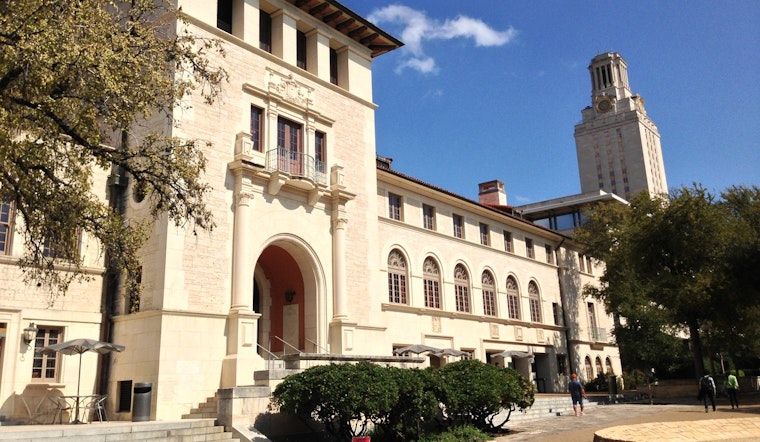
The University of Texas at Austin just grabbed the top national spot for research funded by the National Science Foundation in fiscal year 2024, a win that confirms the campus’s growing pull in areas ranging from AI to semiconductors. UT researchers landed $176.4 million in NSF-backed projects that year, helping push the university’s total research spending past $1.1 billion and giving local labs and graduate programs fresh fuel in money and visibility.
How The Feds Rank UT’s Research Muscle
According to data from the NCSES Higher Education Research and Development survey, UT led all U.S. universities in NSF-funded R&D for FY 2024, clocking $176.4 million in NSF-supported research. The HERD tables lay out institution-by-institution, agency-specific funding and serve as the federal government’s official scorecard for academic R&D spending.
Campus leadership was quick to celebrate. “It is a privilege to have the long-held trust of the federal government,” UT President Jim Davis said in a statement, crediting faculty and graduate students working across AI, semiconductors, and other priority areas, according to UT Austin News.
UT’s Scorecard Across Federal Agencies
The same NCSES HERD tables show UT holding its own across other big federal funders. The university ranked No. 5 nationally for Department of Defense research funding and No. 6 for Department of Energy projects. Total research expenditures for FY 2024 landed around $1.14 billion, with roughly $690 million coming from federal sources.
Industry is in the mix, too. Corporate partners contributed about $94 million to UT research, putting the university in the middle of the national pack for industry-sponsored work. The HERD data fold together both stand-alone grants and long-term contracts, giving a fuller view of how research money actually arrives on campus.
Horizon Supercomputer And The AI Arms Race
Some of that federal cash is already hardwired into campus infrastructure. The Texas Advanced Computing Center is home to Horizon, the National Science Foundation's Leadership-Class Computing Facility, which TACC says will be the nation’s largest academic supercomputer and is built to accelerate AI, climate, and biomedical research, according to TACC. The new computing power and related facilities around Austin show how HERD dollars turn into lab space, specialized equipment, and local partnerships.
What UT’s Win Means For Austin
UT leaders point out that more than three-quarters of the university’s externally funded research is paid for by federal agencies, a concentration they say supports high-skilled jobs, graduate training, and startup activity across the Austin area, per UT Austin News. The HERD result, combined with UT’s streak of top 10 placements across NSF, DOD, and DOE funding over the past five years, gives faculty a stronger hand when pursuing follow-on grants and private sector deals.
The HERD report sets the baseline for FY 2024. Upcoming award announcements and FY 2025 accounting will show whether UT can hang onto the top NSF-funded slot. For now, the ranking locks in Austin’s claim as a major national research hub and highlights how federal R&D money is reshaping the city’s scientific economy.





